
Redefining the Tour Experience: Designing a Smarter Travel Guide App
Client
Tread
Industry
Tourism
Platform
iOS
My Role
Product Designer
Project Timeline
Sep 2020 - Jan 2021
Background
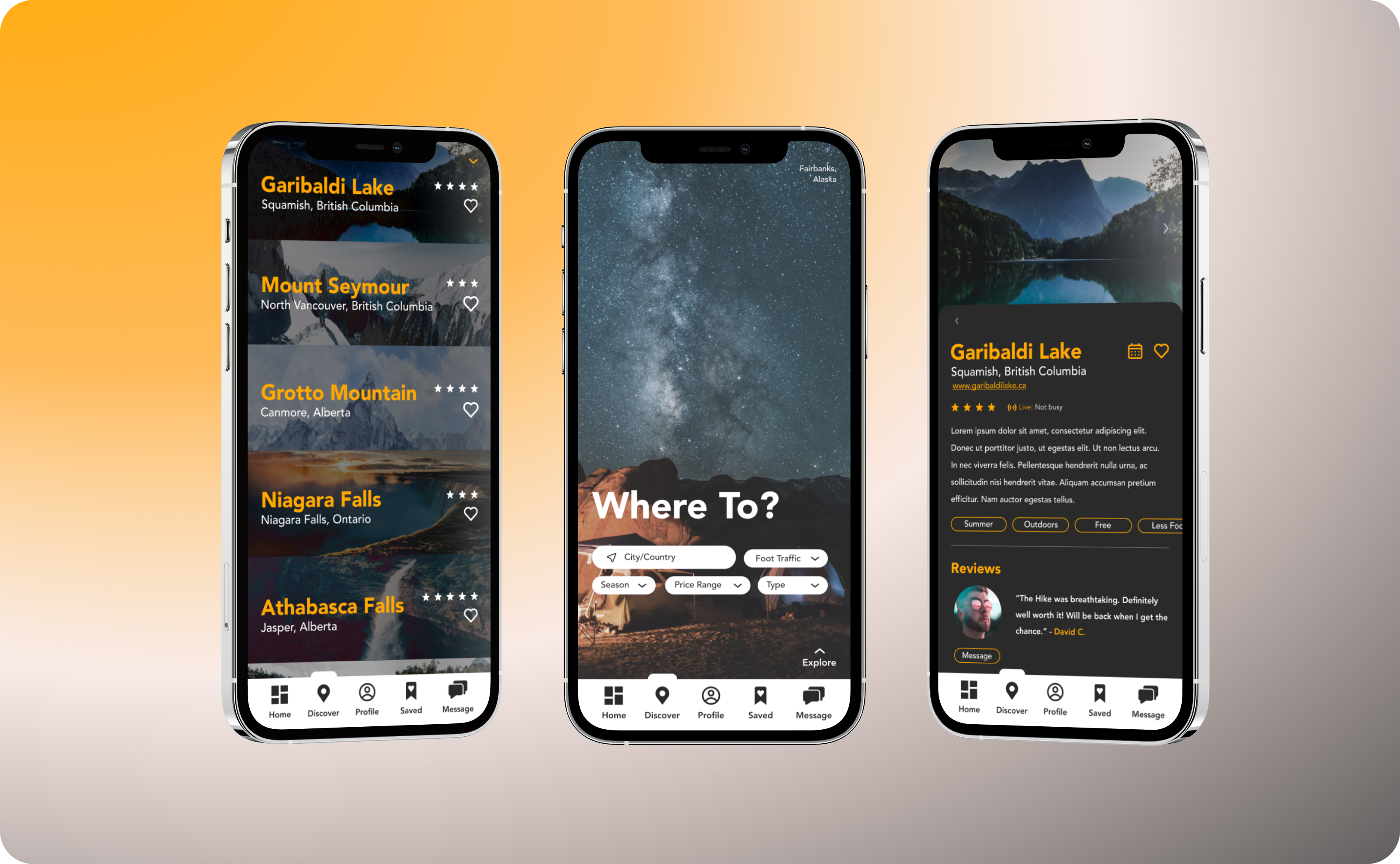
Tread helps users discover new destinations by providing up-to-date, relevant insights such as foot traffic, pricing, and seasonality. By combining real-time data with live chat from travelers around the world, Tread makes exploring and evaluating destinations easier and more informed. Here is how:
- Allow users to set specific filters (season, foot traffic, pricing, etc.) depending on the user’s wants & needs.
- Enables real-time messaging with other travelers, so insights come directly from people who’ve been to the destination.
- Displays live wait times for each destination, helping users avoid long lines and make better use of their time.
The Challenge
The primary challenge was to design an application which places the user’s needs to discover information intuitively. While within the app, Tread uses few predictive technologies to help the user discover important contextual features. The app structure, user interface, and functionalities needed to be designed to easier connect with its users by providing better access to the live chat feature.
Understanding the User
The likely users to use a tour guide app are between 25 and 35 years of age based on user research. They are working professionals, college students, or year-round travellers who want to discover new destinations. I performed qualitative informational research to give me some direction and better underderstanding of how users interact with the platform, their needs regarding platform usage, and what motivates or demotivates them. This then led me to develop my hypothesis.
To Sum it up...
Tread provides users with an opportunity to experience their selected destinations in a new way. Particular features are used frequently and extremely important; not finding it often contributes to frustrations since transportation and travelling have such a significant impact on everyone’s lives.
I set out to conduct a deep understanding of user needs and design an application to improve their travel experience. To fix the usual users’ typical issues by designing Tread; the layout was designed with feedback from users across diverse cultures. Overall, this application will make discovering new destinations and receiving insights from other travellers, a walk in the park.
.png)
Hypothesis
What makes it difficult or confusing for travelers to explore the top-rated low traffic destinations in any city?
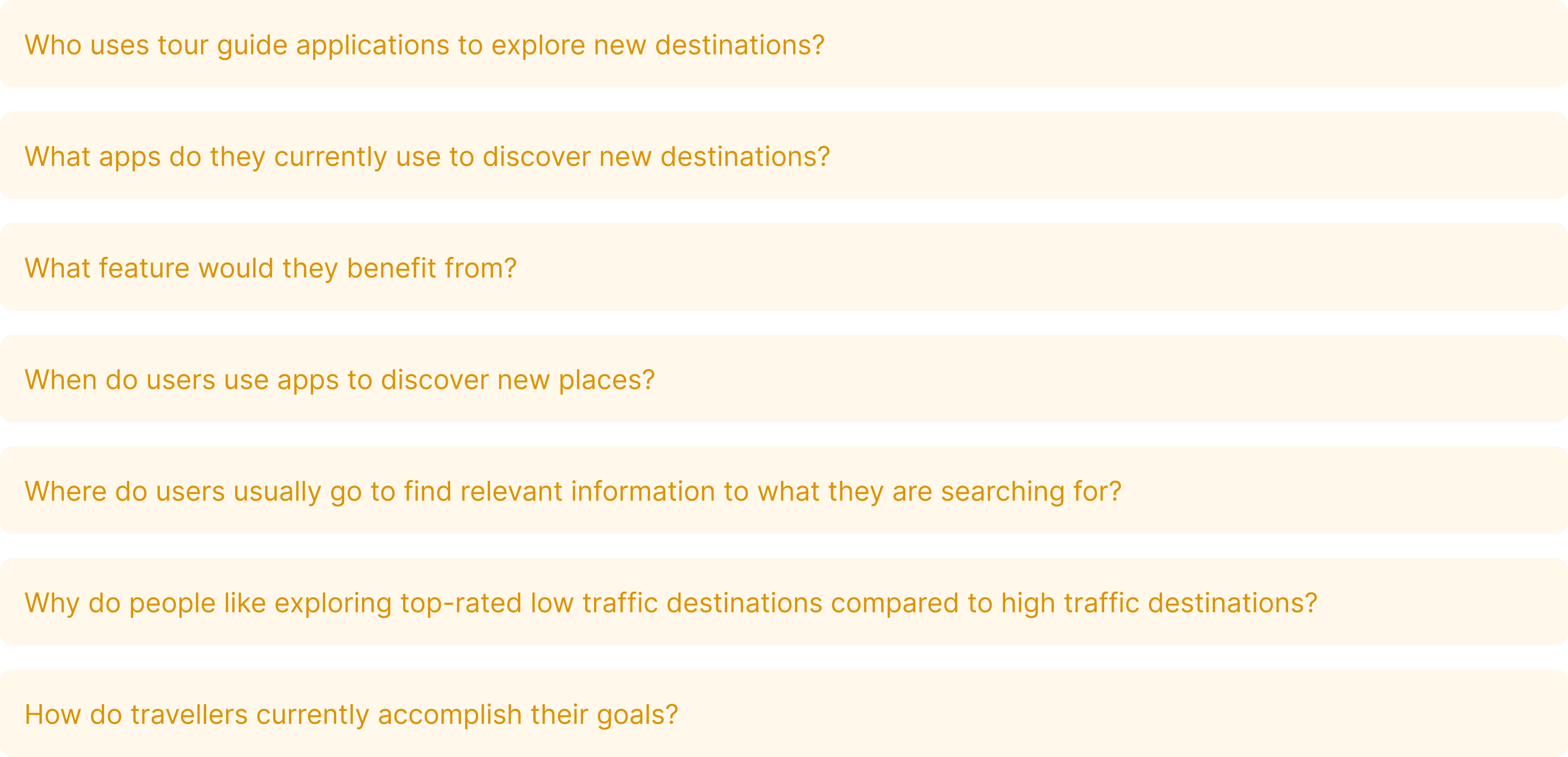
I set out to ask the following questions:
Insights
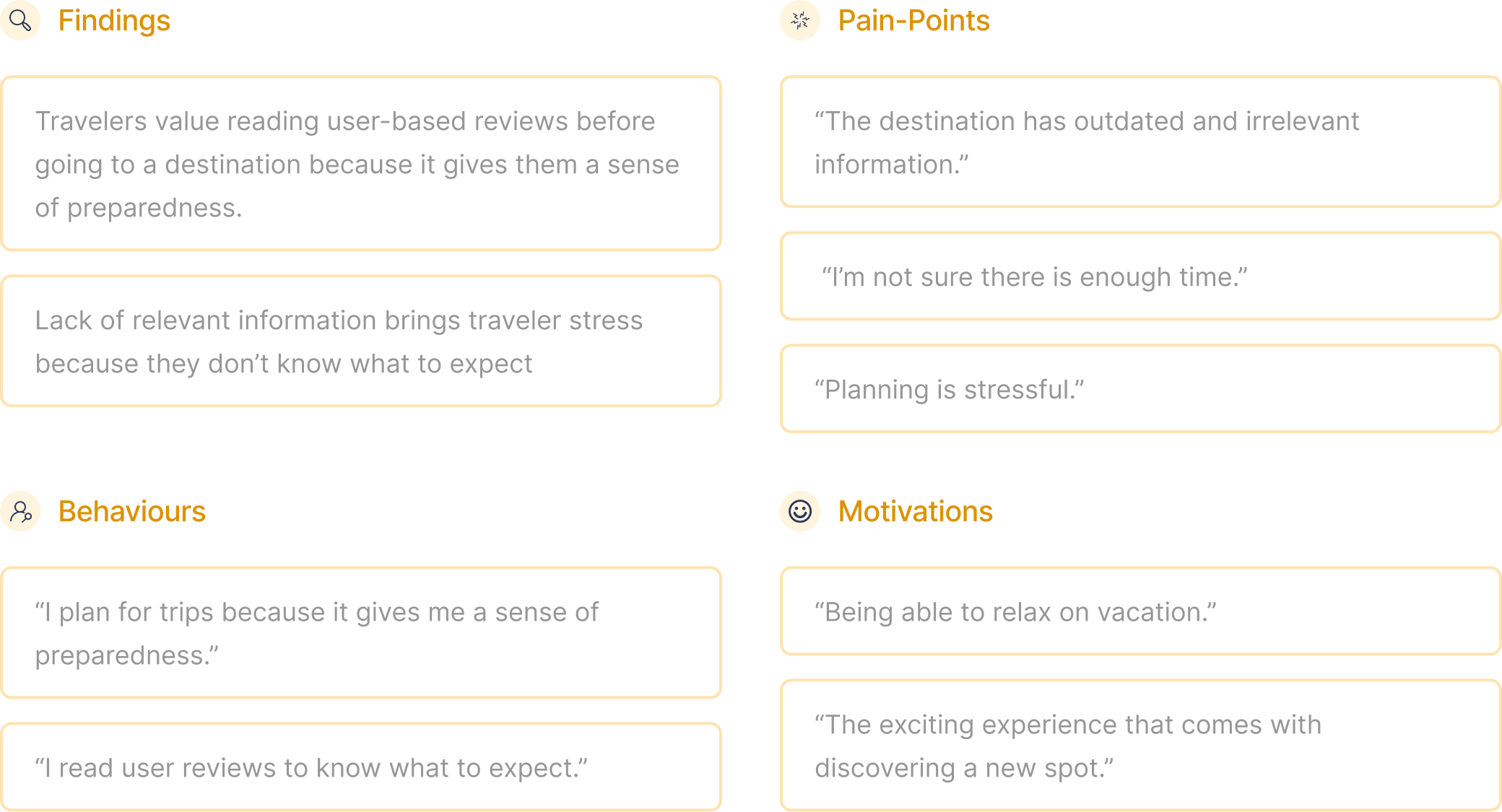
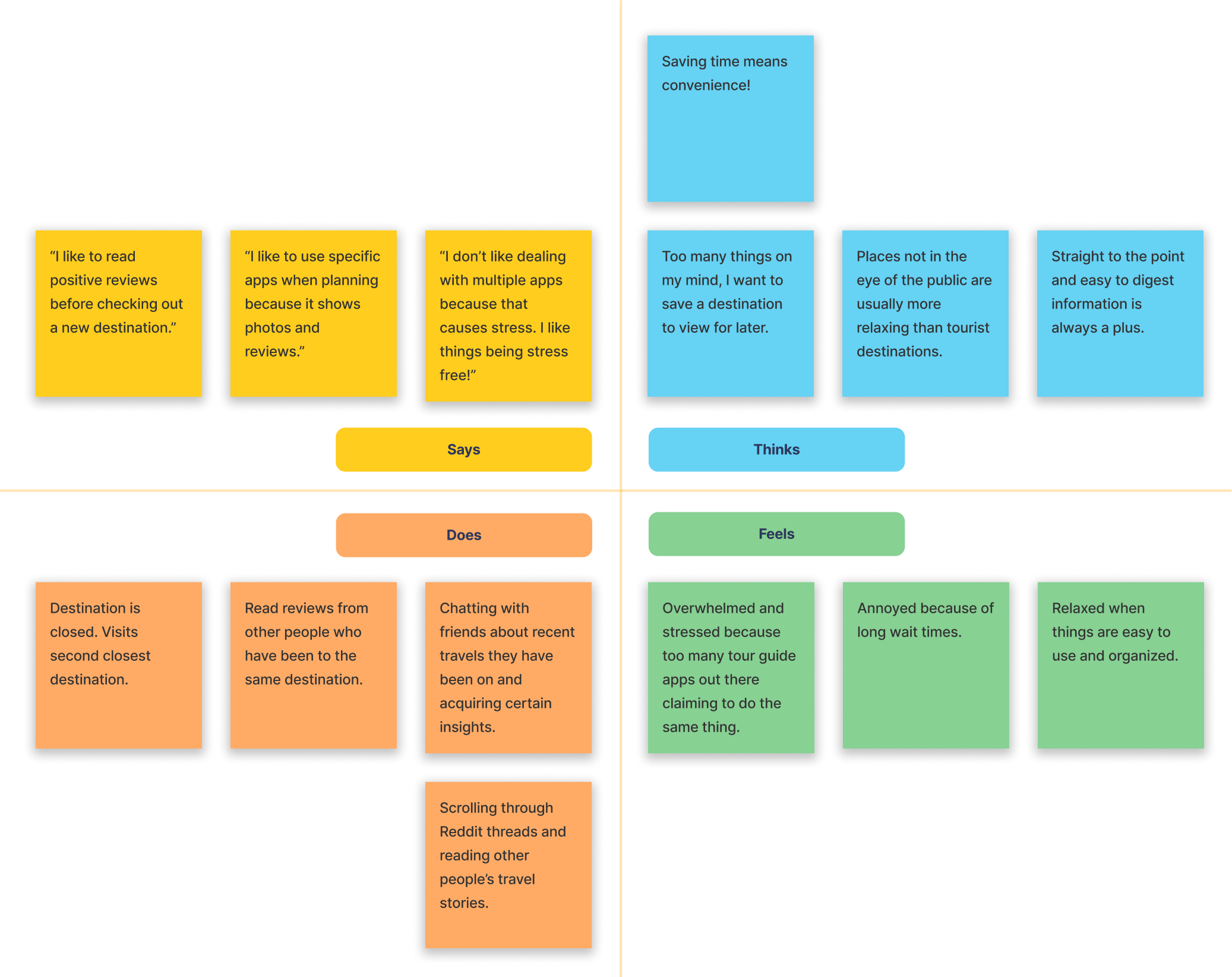
Up-to-Date, user-based, tour guide information would improve the overall travel experience by helping people discover the top-rated low traffic destinations in a city, so they can avoid the stress that normally accompanies travel.
Personas
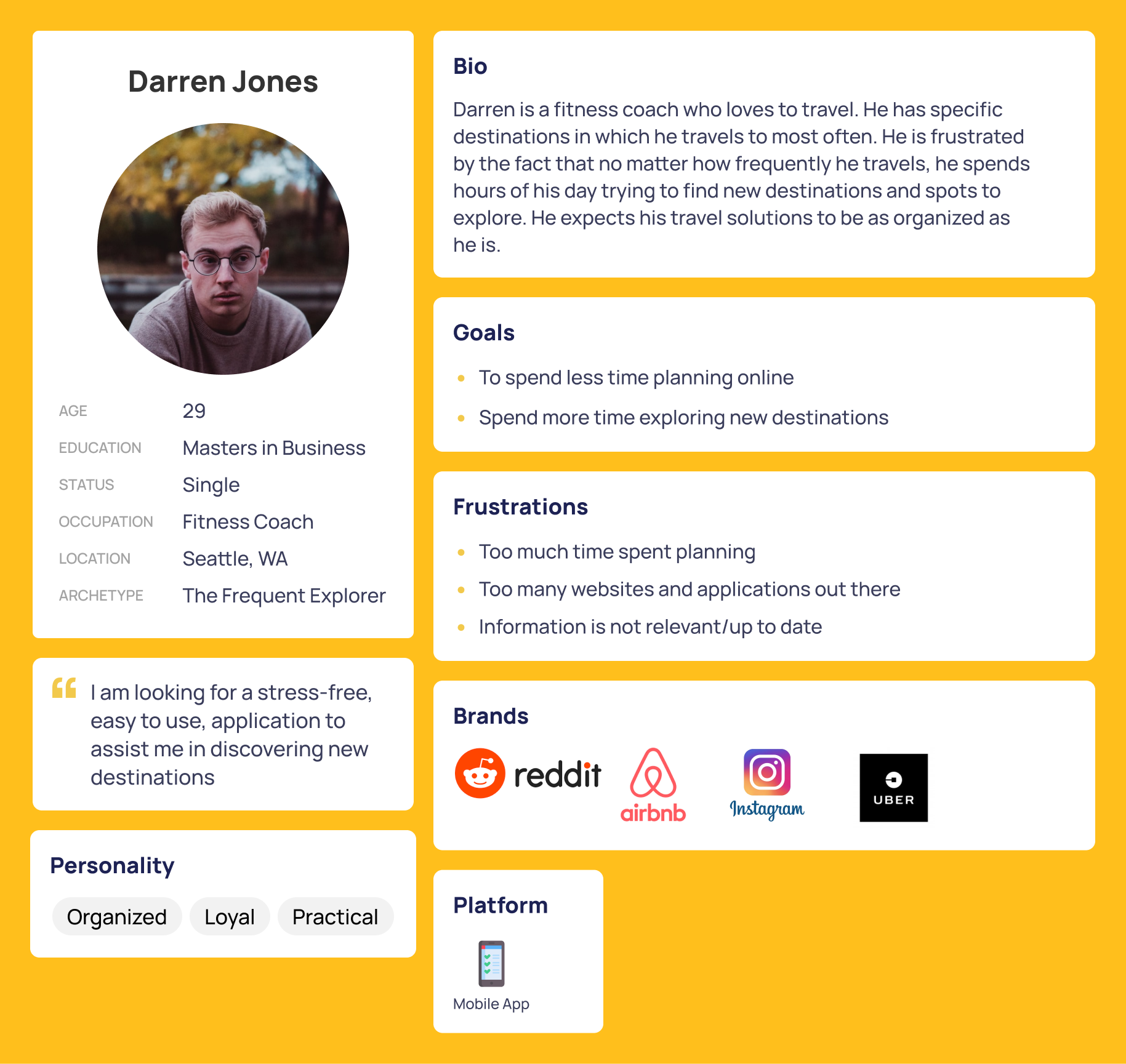
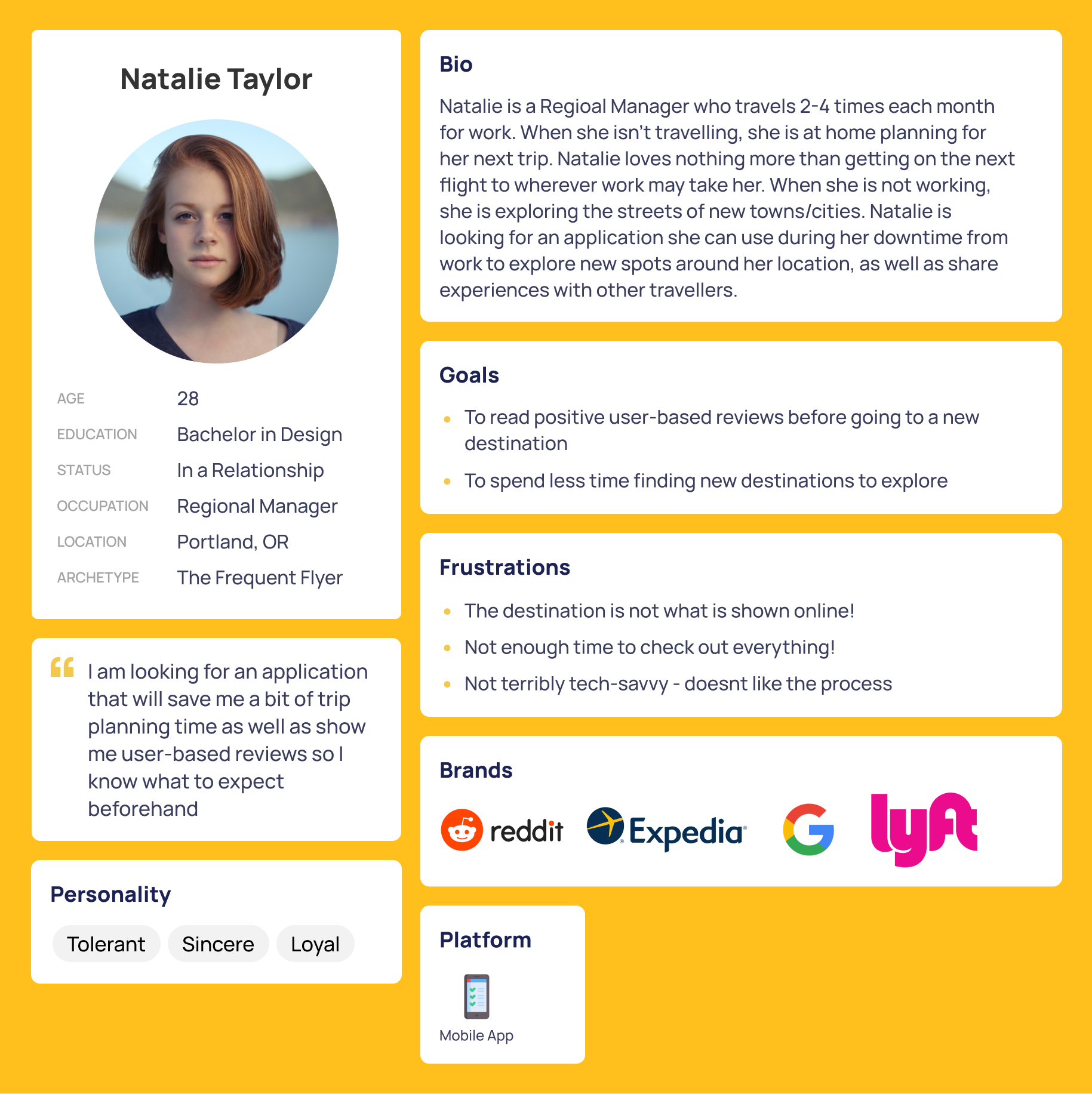
The two personas to relate to the everyday travelers’ frustrations and feelings. Based on the research, qualitative data was synthesized then developed into the user personas which would guide the design process.
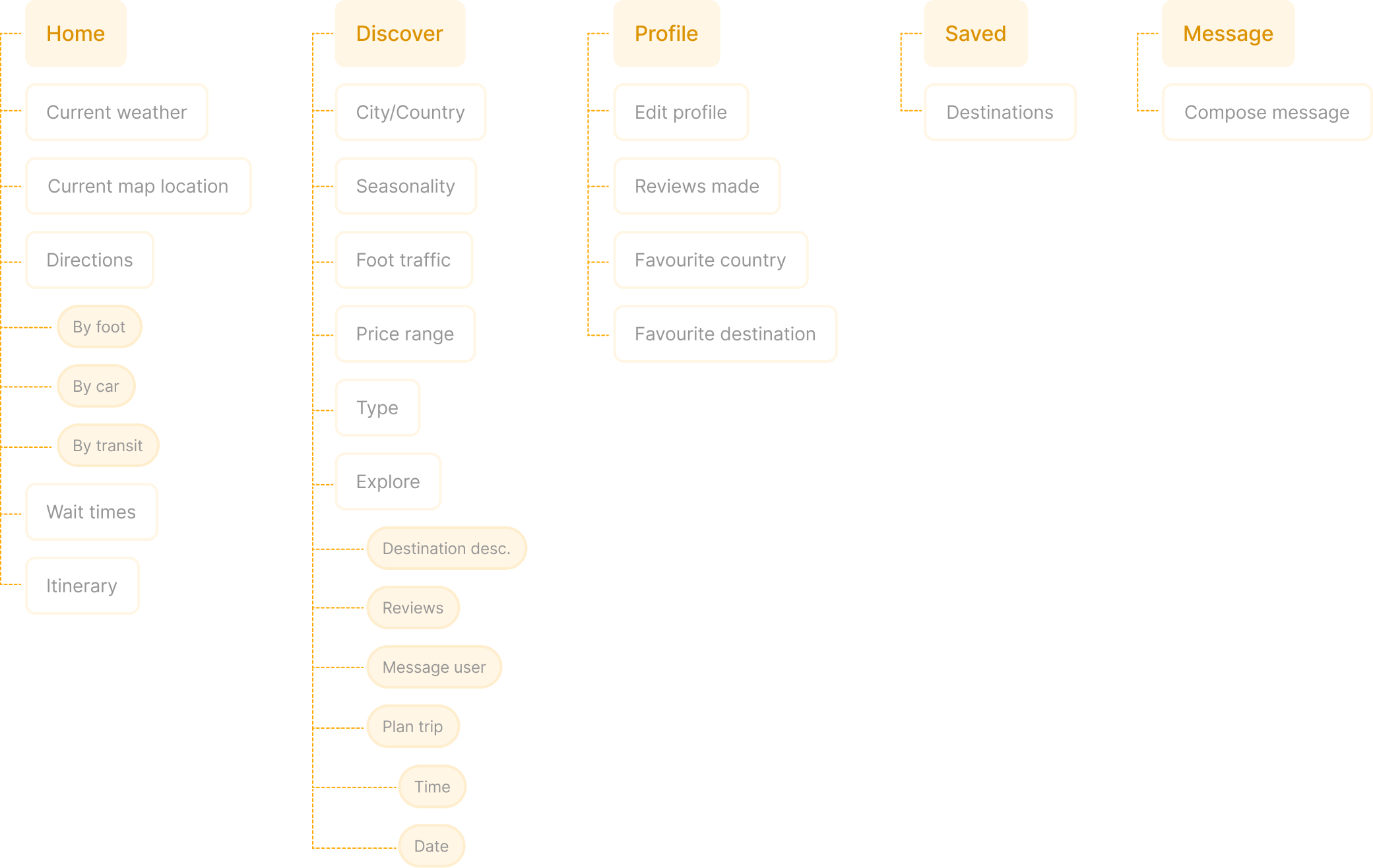
Information Architecture
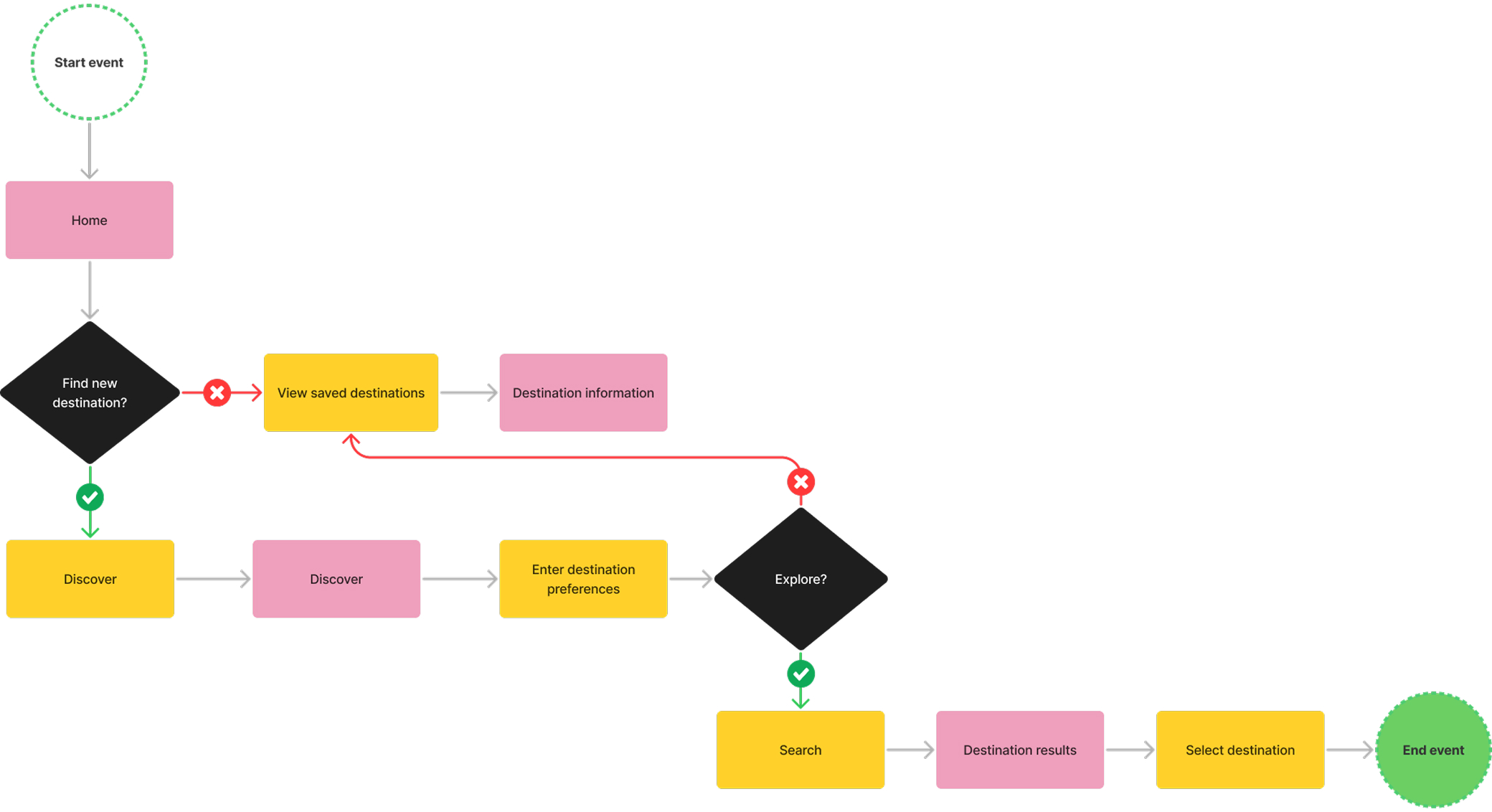
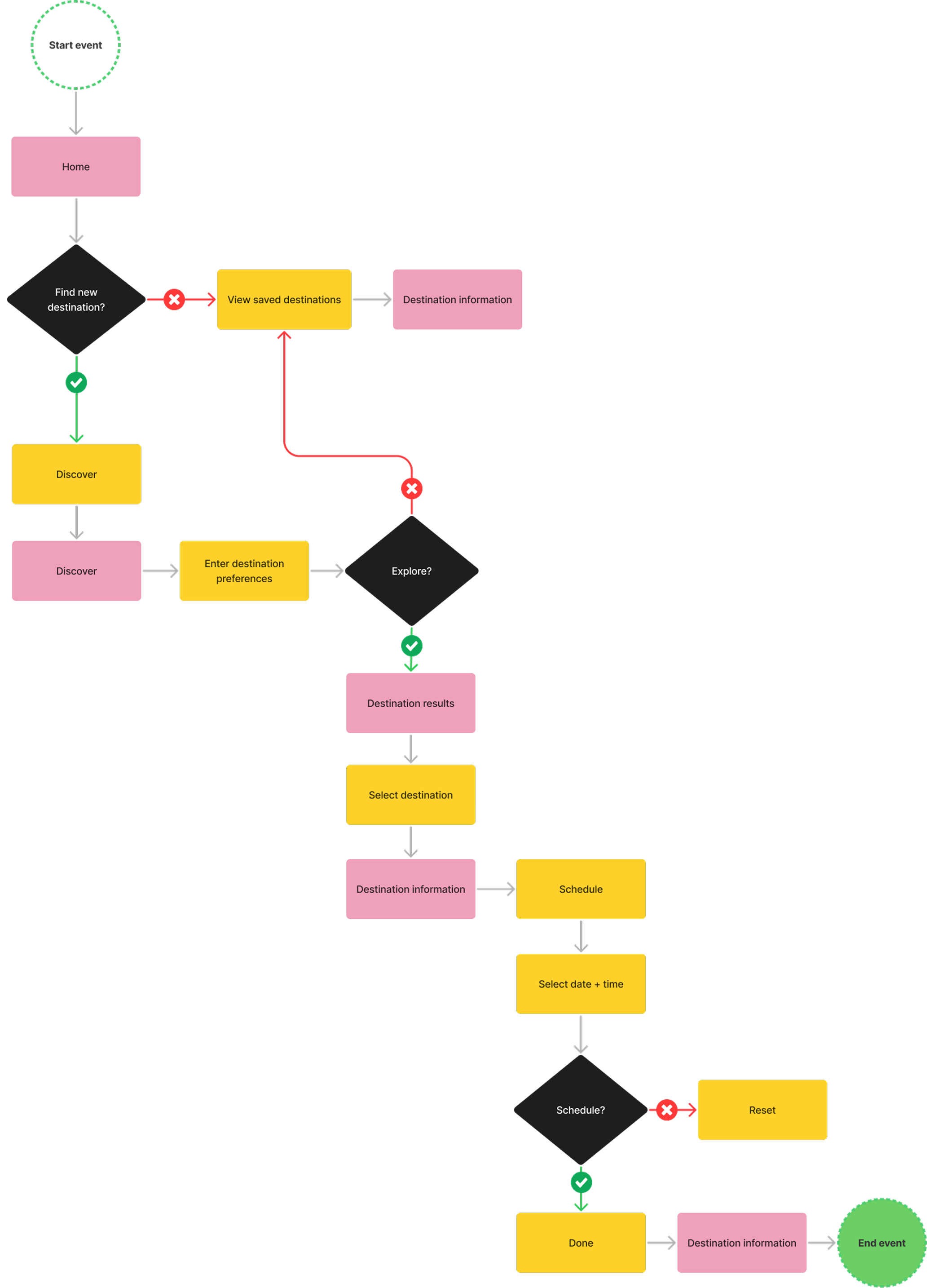
Sketches
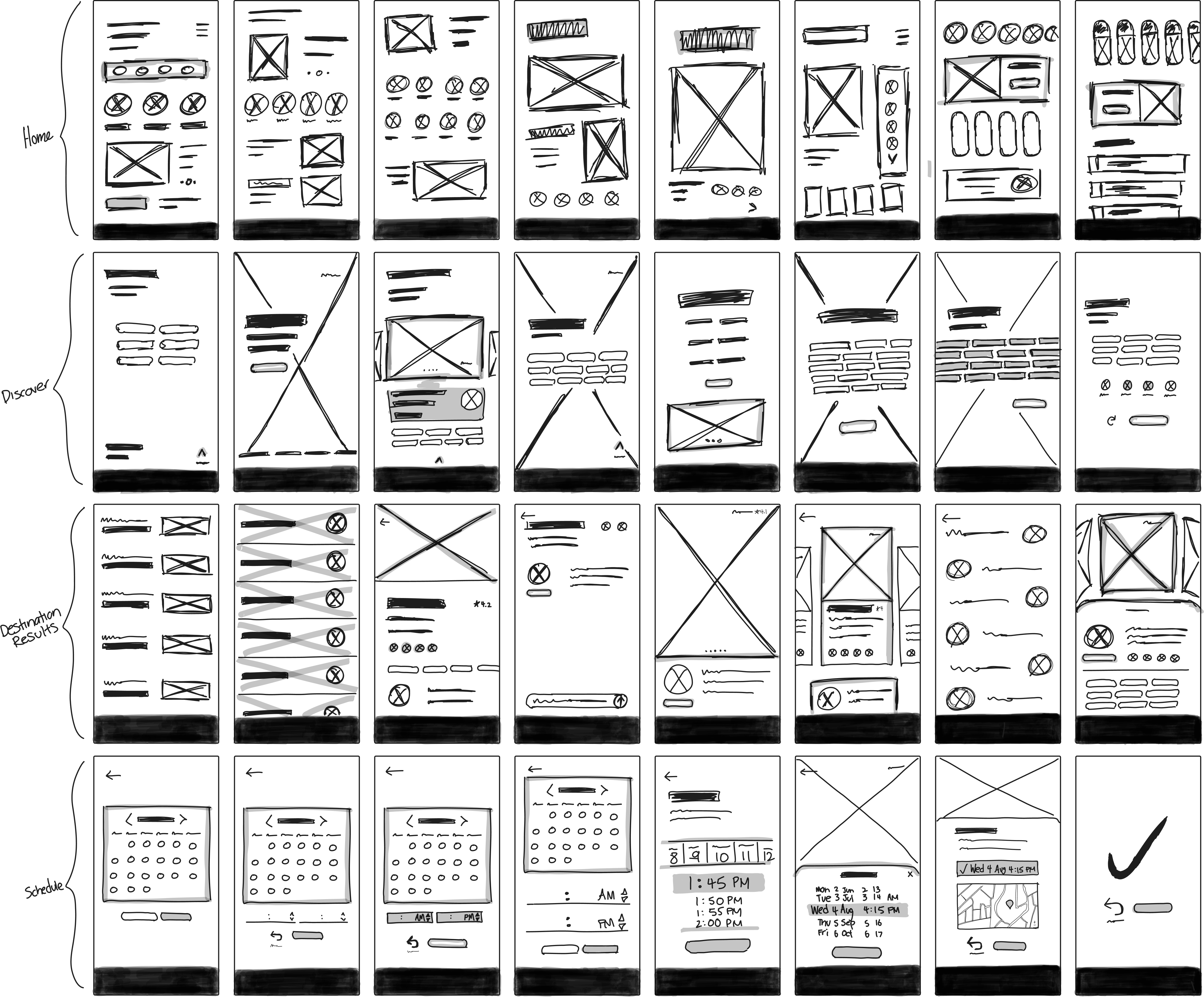
Using pen and paper sketches, I was quickly able to come up with how potential solutions could address our pain points. The two personas to relate to the everyday travelers’ frustrations and feelings. Based on the research, qualitative data was synthesized then developed into the user personas which would guide the design process.
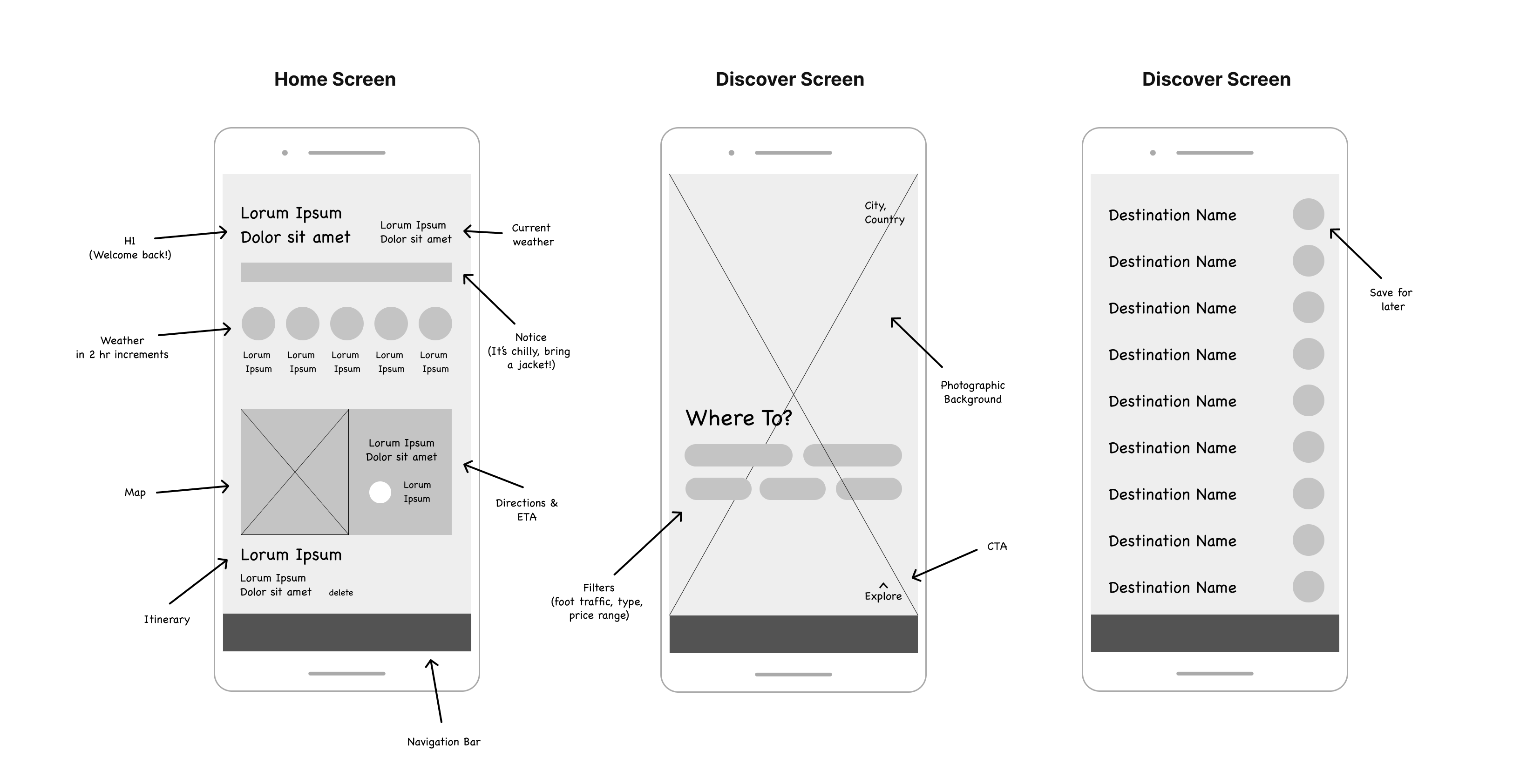
Wireframing
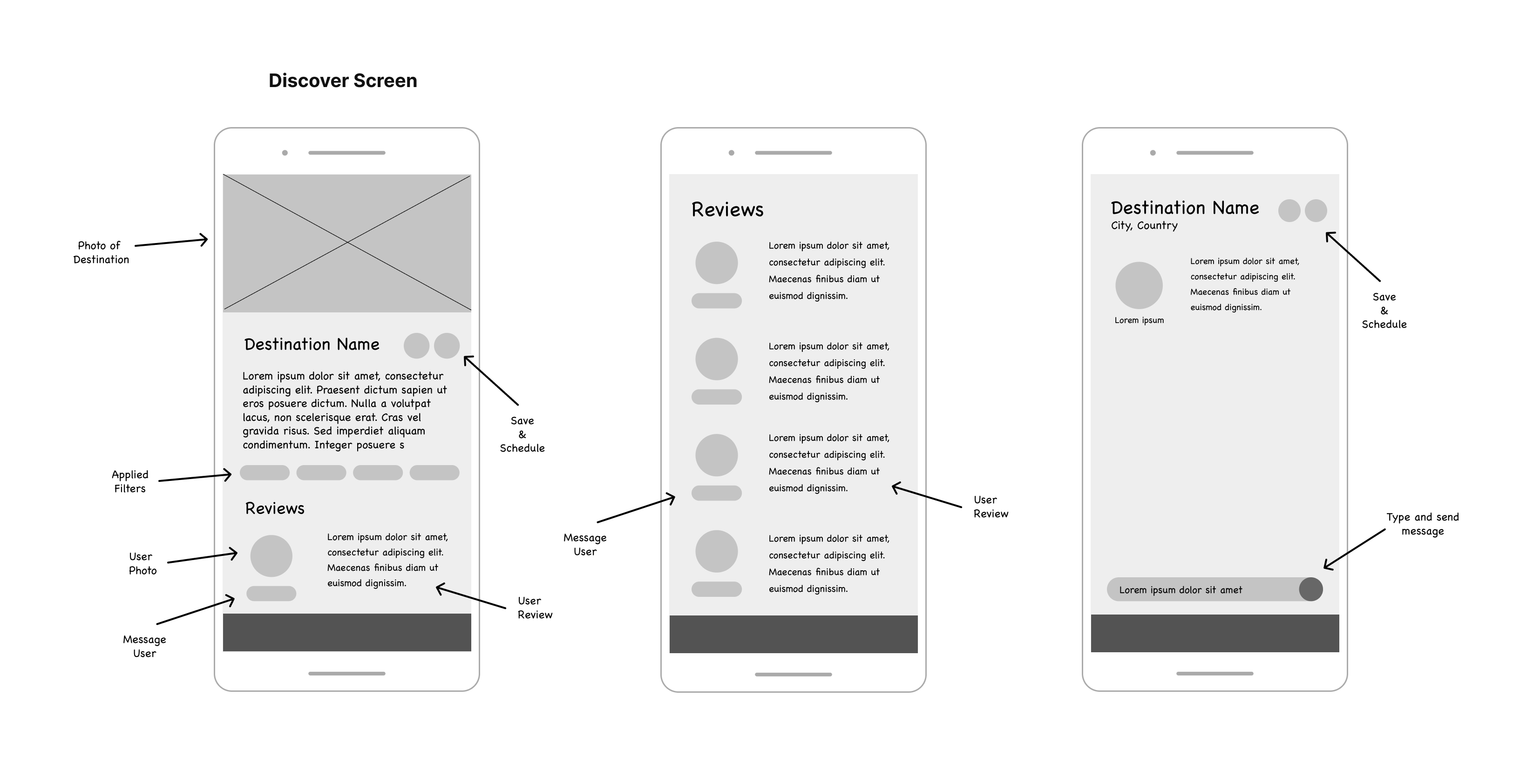
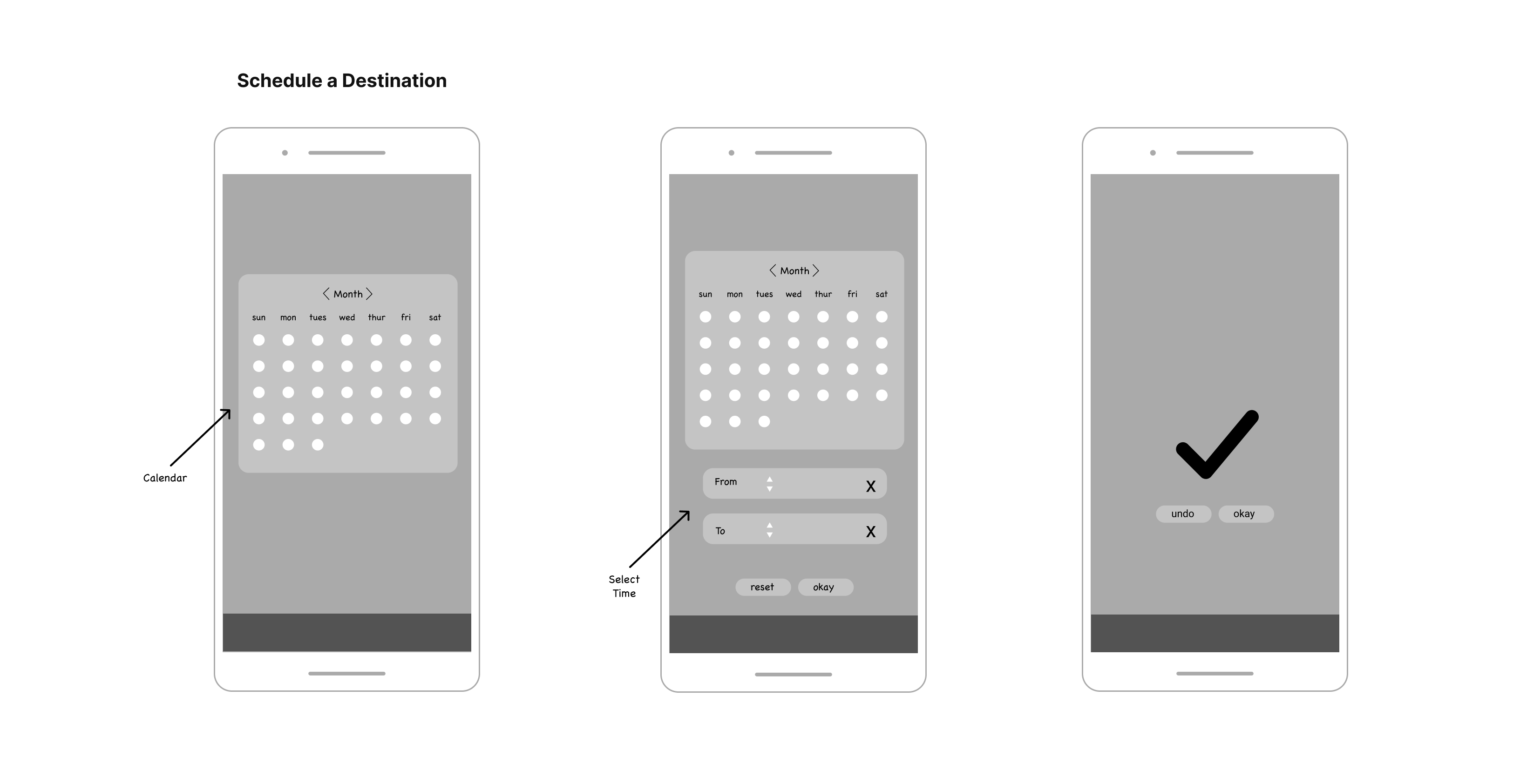
Prototype
Competitor Research
At the start of the project, I conducted a competitive analysis to validate my hypothesis, understand the problem space and see what competitors were doing. Data from competitive analyses and user interviews will help identify user pain-points and gaps in the existing apps that I may not be aware of. To better understand people’s needs and pain points, I defined a series of questions and began researching the problem.
- Who are the users that are using tour guide and travelling Apps? What do they use to find directions, locations and wait times? What are the different Apps targeted users are using? Are other Apps addressing the user pain points?
- What are the available Apps out there? What Apps do users like or dislike? Why?
Findings
- Most of the Apps don’t have accurate timing.
- There is no option to interact with other users to get exact information.
- Most of the Apps are not designed to meet the user’s needs.
What is next ?
To create a modern, optimized user journey, I grounded the design process in user pain points, feedback, and personas. Emphasizing real-world use cases over technology-first thinking allowed for a more open, discoverable experience, setting a strong foundation for meaningful solutions.
To measure how ‘usable’ a design is, I measured three things:
- Effectiveness - whether a user can complete a task
- Efficiency - how long it takes them to complete a task
- Satisfaction - how the user feels about the task
Usability Testing
I performed usability testing to identify feedback themes and reiterate the designs based on the research. To validate my design, I asked ten different users to complete the same tasks to test the design’s friendliness and usability. To quantitatively review the usability assumptions of the app, I did a testing with 10 users.
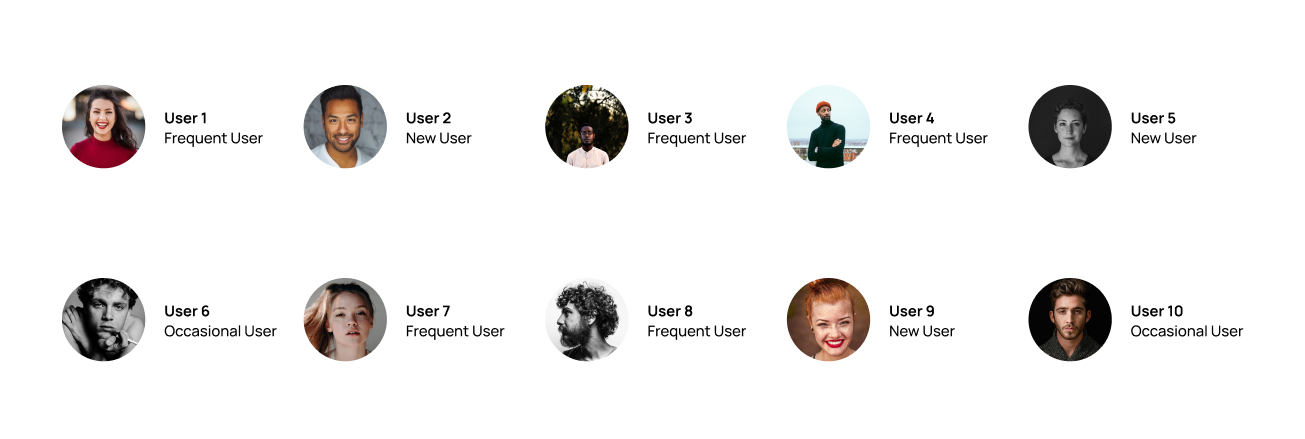
Outcome of Usability Testing

Conclusion
Throughout this project, I learned that users prefer an interactive tour guide application to message other users who have been to the destination to get real-life experiences. They also liked a sleek design that saves time, simple to use, and straight to the point. Coming out with a design by getting opinions of users using different tour guide and travelling Apps helped me understand a lot.
Additionally, adding specific features and having users test them out provided me with the necessary insights. Adding a live video feature, something that has yet to be done, would generally be the next step for Tread. In addition, a user stated they had never seen a live chat feature on any tour guide app and completely loved it.